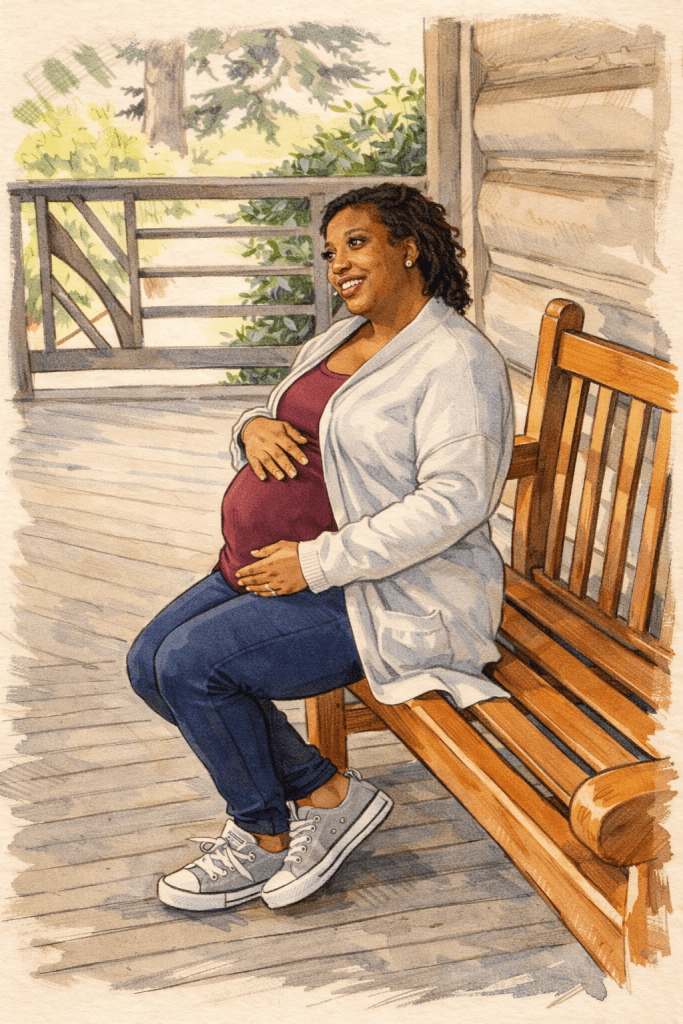
There is a particular kind of knowing that comes with pregnancy.
It is not clinical. It is not something you can chart or quantify. But it is real. You know your body, you know that precious being growing in you.
The first time I experienced it, I was dismissed.
The First Loss: When Knowing Was Not Enough
My first pregnancy ended in loss. But before it ended, I knew something was wrong.
This pregnancy was spiritual. I knew the moment I conceived. I could feel movement long before I was “supposed” to be able to feel it. I was deeply connected to that baby.
So the morning I woke up and the baby didn’t greet me with movement, I instantly began to cry. I felt the shift before anything could be confirmed. I did what we are told to do, I called the nurse hotline. I explained what I was feeling, or accurately, what I was not feeling.
I was dismissed.
When I ultimately lost that child, the response was clinical at best and careless at worst: “You’re young. You can have another one.” This is a direct quote.
That statement does not account for the reality that I was already a mother. That child existed. That loss did not reset me; it marked me.
Even now, my body remembers. Around this time each year, I feel it before I consciously recall the date. There is a grief that does not require a calendar.
That was my introduction to maternal care.
Being Believed Changed Everything
My second confirmed pregnancy ( I had another one in between, but lost the baby before I could confirm it with a doctor) was my first live birth: My rainbow baby. But more than that, it was my first experience being believed.
After being told I might not be able to ever carry to term by a doctor who didn’t even know I was pregnant at the time, I chose a midwife. Not out of preference, but out of necessity. I could not return to a system that had already shown me it would not listen.
My midwife had worked in hospitals and left because of what she saw there. She did not just provide care; she advocated.
She told me I was strong enough. She treated my pregnancy as something to be protected, not managed.
Even when complications arose near the end, she erred on the side of my safety. She sent me to the hospital when needed. When I was sent back, she was not passive about it. She was concerned. Not about convenience. About risk. About me.
That birth was healing. I gave birth at home. I learned to trust, and forgive, my body.
Support Is Not Optional—It Is Structural
By my second live birth, I understood something more clearly: outcomes are not just about medicine. They are about support.
That pregnancy introduced me to the most impactful support I had across all five pregnancies: My doula.
A Black woman. Calm. Present. Steady.
When my labor progressed quickly and we had no childcare for my oldest, she stepped in without hesitation. She held my child so my husband could focus on me. She created stability in a moment that could have easily unraveled.
After the birth, she stayed. When the standard birth center protocol released me within hours of birth. She followed me home. Not in a formal, clinical way, but in a way that acknowledged reality. My husband, a student, had to return to his schedule almost immediately (The fact the professors have no understanding that the birth of a child should excuse some absences is a travesty that should be addressed). My doula filled the gap.
What she provided was not extra. It was essential to a mother who’d given birth hours before and had an 18 month old.
When Care Aligns, the Body Responds
My third pregnancy was my strongest experience.
I had a team that understood me. I trusted them. They knew me.
When I asked for no talking and the lights out. No one was offended or even questioned it. The whole experience was designed for me.
At one point during labor, I said what many women say: “I can’t do this.”
My midwife responded: “Yes, you can. God has empowered you for this.”
I still tear up thinking of that moment. That was an alignment moment. My care matched my values. My environment supported my process.
I delivered my largest baby without injury, tearing, without medication. No rushing. No unnecessary intervention. Just time, trust, and support.
The Hospital Experience: Pressure Over Care
My fourth live birth: The birth of my youngest, was the only hospital delivery.
It was also the most traumatic.
My water had broken days earlier, making home birth too risky. I resisted, but at a certain point, I understood the importance of an environment that could intervene if needed. What I did not expect was the complete shift in priorities.
Hospitals are not designed for individualized care. They are designed for throughput.
Lights on. Constant interruptions. Timelines imposed on a biological process that does not operate on a schedule.
There was persistent pressure to accelerate labor. Not because I or my baby were in distress, but because I was not progressing fast enough for their metrics.
At one point, I was told that if I did not deliver by a specific time, a doctor would step in.
I had not been in labor long.
That moment clarified everything. This was not about my safety. It was about compliance with a system.
I prayed. Not for them, but for relief from having to fight while in labor.
I delivered minutes before their deadline.
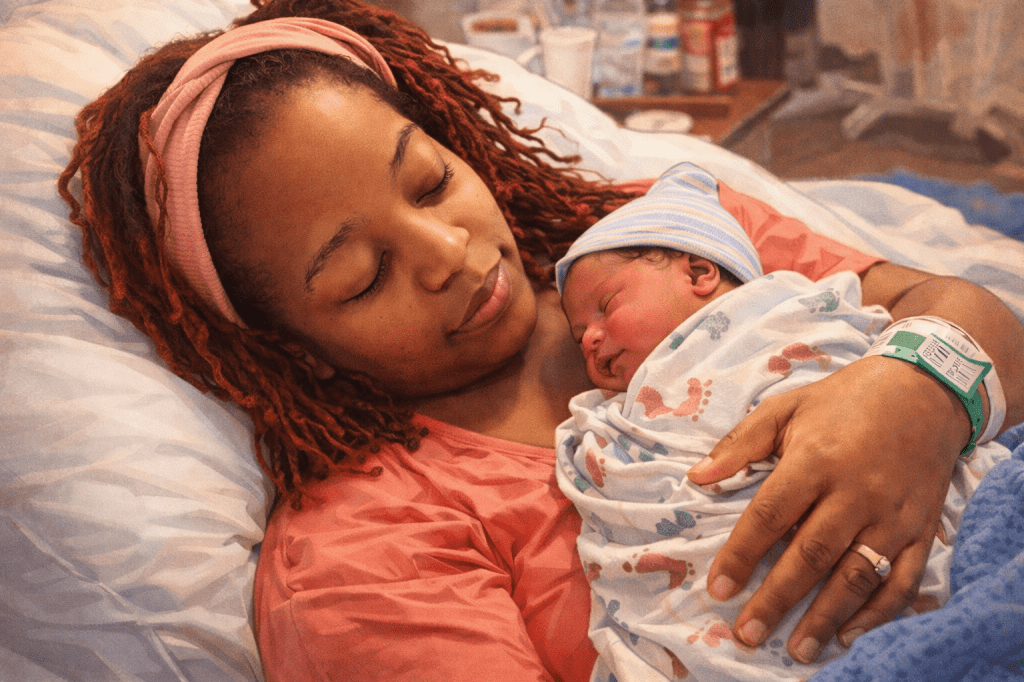
Postpartum: When Advocacy Became Legal
The most alarming part of my experience came after delivery.
My daughter had mild jaundice. This is common for children of color and in breastfed babies, particularly in the early days when milk has not fully come in. I had seen this before in my previous births. I understood the numbers. She was not in the danger zone.
The hospital disagreed. Not with the numbers, their own charts said she was not in danger. They disagreed with taking a natural approach to a non-existent problem.
They pushed for interventions that were not medically necessary in that moment. Donor milk. Extended stay. Escalation based on proximity to a threshold, not actual risk.
I responded with data. With guidance from the American Academy of Pediatrics. With my own experience across prior births.
It did not matter. In fact, it felt like once I revealed my knowledge they became more incensed; more determined to establish authority.
At one point, I was told:
“You’re not leaving this hospital with that baby.”
That is when the situation shifted.
Less than 24 hours postpartum, I had to move from patient to attorney.
I asked them to leave the room. I began making calls. I started assessing my legal position. I considered all I knew about consent, parental rights, the limits of hospital authority.
I utilized my resources and my support teams. I knew people who knew people. Even then, the advocate in me thought of the women who didn’t know people…
Because at that point, it no longer felt like care. It felt like control.
They eventually released me. With heavy handed warnings about me taking my child’s life into my own hands and the risk of investigation if anything happened… For mild jaundice!
But when my husband put me in the car, I told him to drive. Immediately.
I felt like I was escaping. I was afraid someone would come out and stop us.
That is not how postpartum should feel.
The Pattern Is Clear
Across five pregnancies—one loss, four live births—the pattern is not subtle:
- When I was dismissed, I lost a child.
- When I was believed and supported, I had safe, empowering births.
- When I was placed in a system that prioritized protocol over person, I had to fight.
And even as an attorney; articulate, informed, capable of asserting my rights, I still had to escalate to be heard.
That is the part that should concern everyone.
What This Means Beyond Me
Black Maternal Health Week is not abstract.
It exists because women are navigating systems that require them to prove, argue, and defend their own experiences in moments where they should be receiving care.
It exists because outcomes change depending on whether a provider listens.
It exists because advocacy is functioning as a substitute for protection.
And not every woman has the ability, or the capacity in those moments, to do what I did.
Closing
Black Maternal Health Week exists because too many of us are surviving systems that were never designed to center us.
And survival should not be the standard.
 Sadity Esq
Leave a comment